The field of SynBio

Synthetic Biology is a rapidly growing interdisciplinary field focused on creating new biological parts, devices and systems or repurposing existing ones for beneficial purposes (gene therapies, sustainable materials, food production). Grounded in principles of standardization, abstraction, and modularity, it applies the Design-Build-Test-Learn engineering cycle to address long-standing biological challenges. It integrates knowledge across sectors such as natural sciences and technology, health, and social sciences, aligning closely with strategic priorities, including sustainable materials and technologies, biomedical advancement, biological system exploration, and the impact of digital-age technologies.
The field is expected to experience exponential growth, with a projected socioeconomic impact of 3.6 trillion dollars annually by 2030–2040. Synthetic Biology is a priority area in the EU.
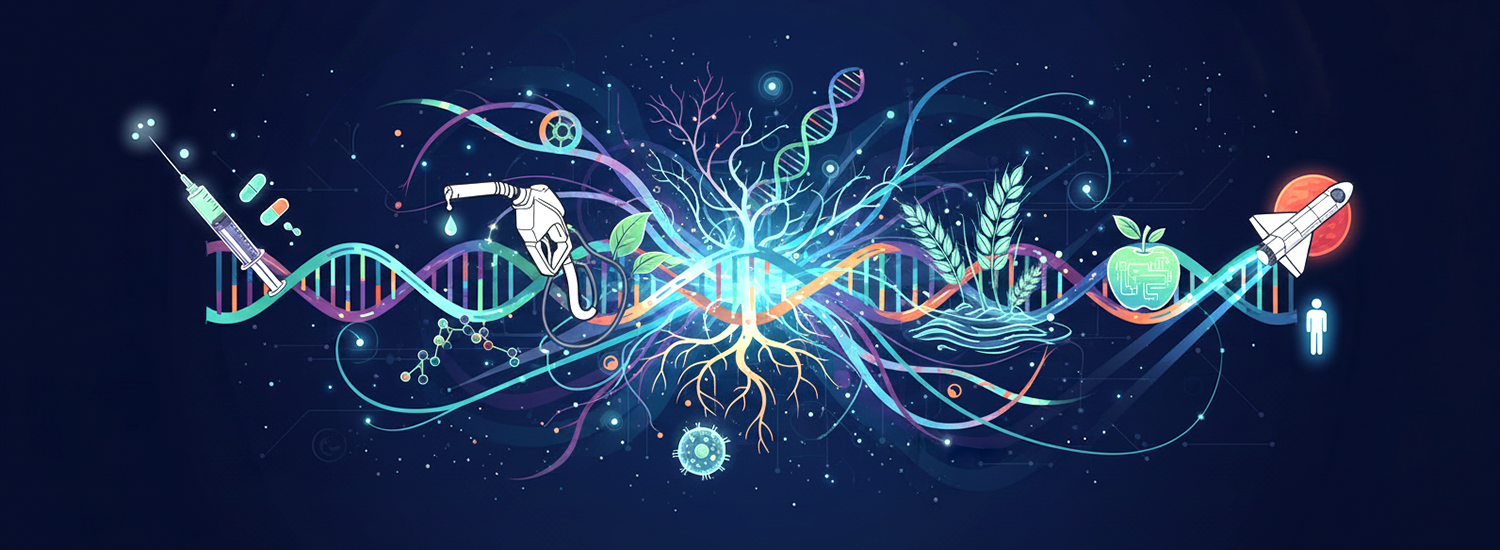
The program is necessary due to the highly interdisciplinary nature of the field, which targets topics ranging from engineering, computation, health, life sciences, biotechnology, plant sciences, to ethics. With expanding career opportunities in academia, industry, and government, the MSc program will attract a new pool of high-quality applicants and train specialists, enhancing their employability.
This is a high-impact, research-driven program designed for top-performing life science and engineering graduates who want elite training at the intersection of biology and engineering, with exposure to both the European and North American innovation ecosystems.
The Dual Master of Science program in Synthetic Biology awards two distinct MSc degrees in Synthetic Biology, one conferred by the University of Thessaly and the second by the McGill University.