Responsible Innovation and Biosafety
Learning Outcomes
Synthetic Biology operates at the frontier of genome engineering, pathway design, chassis construction, and AI-assisted biological design. These capabilities create transformative societal values, but also introduce biosafety, biosecurity, ethical, and governance challenges.
This course equips students with the conceptual, regulatory, and operational tools required to conduct responsible research and innovation (RRI) while ensuring compliance with biosafety and dual-use governance frameworks.
Upon successful completion, students will be able to:
- Differentiate biosafety, biosecurity, and dual-use risk in Synthetic Biology contexts.
- Apply biological risk group classification and containment level principles.
- Interpret relevant regulatory frameworks (EU and international).
- Conduct structured risk assessments for SynBio workflows (e.g., genome editing, gene drives, engineered microbes).
- Evaluate ethical dimensions of advanced genome engineering.
- Design a responsible innovation strategy for a SynBio research project.
- Communicate risk and uncertainty to scientific and non-scientific stakeholders.
Module Syllabus
Introduction: Why Responsibility in Synthetic Biology?
Synthetic Biology as a high-impact enabling technology
Historical lessons (recombinant DNA, Asilomar conference)
Conceptual introduction to Responsible Research & Innovation (RRI)
Ethical Foundations
Bioethics principles (autonomy, beneficence, justice, non-maleficence)
Precautionary principle
Innovation vs precaution debate
Societal trust in biotechnology
Biosafety Fundamentals
Risk groups (RG1–RG4)
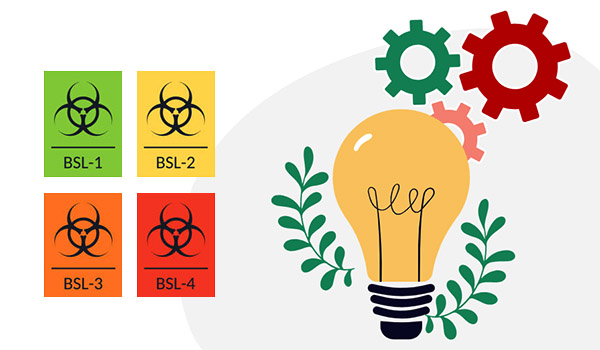
Biosafety levels (BSL-1–BSL-4)
Containment systems (physical & biological)
Laboratory risk assessment methodology
Biosafety in Synthetic Biology Workflows
CRISPR/Cas editing risks
Engineered microbes and chassis organisms
Horizontal gene transfer
Environmental escape modeling
Kill-switches and biocontainment engineering
Biosecurity & Dual-Use
Dual Use Research of Concern (DURC)
Synthetic pathogen reconstruction
DNA synthesis screening practices
Gain-of-function research debates
Governance of Genome Engineering
Germline editing governance
Gene drives and ecological risk
National vs international oversight models
Role of advisory bodies
European Regulatory Landscape
GMO Directives (Contained Use & Deliberate Release)
Clinical translation of engineered organisms
Advanced therapy medicinal products (ATMPs)
Regulatory pathways in EU
Responsible Innovation in Practice
Stakeholder engagement models
Public dialogue strategies
Anticipatory governance
Open science vs security trade-offs
iGEM Foundation safety & security framework
AI, Automation & High-Throughput Biology
AI-driven sequence design risks
Automated biofoundries
Data governance & cybersecurity
Cloud-based bioinformatics risks
Risk Assessment Workshop
Students assigned real-world SynBio scenarios to
• identify hazards and exposure pathways
• analyze consequences
• construct risk matrix
• develop mitigation plan
• assess the ethical and societal impact
• develop a risk communication strategy
Project Presentations & Integrative Debate
Group presentations
Peer review
Structured debate on an identified theme
Suggested Bibliography
- World Health Organization. Laboratory Biosafety Manual, 4th edition.
- Centers for Disease Control and Prevention & National Institutes of Health. Biosafety in Microbiological and Biomedical Laboratories (BMBL).
- European Committee for Standardization (CEN). Laboratory biorisk management standards (CWA 15793).
- European Commission. Responsible Research and Innovation: Europe’s ability to respond to societal challenges (Policy documents & Horizon framework materials).
- Royal Academy of Engineering. Synthetic Biology: Scope, applications and implications.
- iGEM Foundation. Safety and Security Programme documentation.