Genome and DNA Engineering
Learning Outcomes
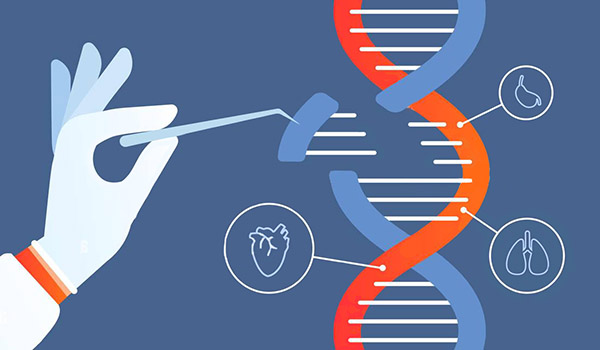
This module provides a fundamental overview of contemporary approaches in genome and DNA engineering. It introduces DNA synthesis and assembly technologies, genome editing with CRISPR, and advanced cloning strategies (Gibson, Golden Gate, MoClo), alongside replicon and vector design principles. Students also explore deep sequencing technologies highlighting their applications in constructing, editing, and analysing synthetic genomes, gaining practical and conceptual understanding of the tools that drive innovation in synthetic biology and genome engineering.
Upon completion the students will be able to:
- Design and execute various cloning techniques.
- Compare and select appropriate cloning methodologies to accommodate synthetic biology experiments
- Explain the principles and workflows of next-generation sequencing technologies.
- Compare different sequencing platforms and select appropriate approaches for synthetic biology experiments.
- Apply single-cell sequencing approaches to evaluate the performance of synthetic gene circuits and engineered cell populations.
- Critically assess the advantages, limitations, and future potential of single-cell sequencing in synthetic biology.
- Understand how natural CRISPR mechanisms inspired modern genome editing technologies.
- Explain the role of CRISPR systems as adaptive immune mechanisms in prokaryotes.
- Apply genome engineering concepts to synthetic biology and biotechnology applications.
- Explain the molecular mechanisms of ZFNs, TALENs, and CRISPR-Cas9 nucleases.
- Design sgRNAs for Cas9 experiments.
- Plan and execute cloning of sgRNAs into plasmid vectors such as AIO Cas9 nickase.
- Evaluate potential off-target effects and troubleshoot common issues in sgRNA cloning.
- Estimate the efficiency of CRISPR/Cas systems.
- Understand how to deliver CRISPR systems to perform genome editing in plants
- Explain the design and function of CRISPR-based gene drives and engineered symbionts.
- Assess ecological, ethical, and regulatory considerations in releasing synthetic insects
Module Syllabus
Advanced DNA Assembly Strategies I- Gibson Assembly
Advanced DNA Assembly Strategies II- Type IIS Restriction Enzyme–Based Cloning, Golden Gate cloning
Advanced DNA Assembly Strategies III-Modular Cloning (MoClo) Systems
High-Throughput and Automated DNA Assembly Workflows
Next-Generation Sequencing for Synthetic Biology
Next generation sequencing to investigate genomic diversity in plants
Single-Cell Sequencing in Synthetic Biology
CRISPR-Cas I : Prokaryotic Adaptive Immune System
CRISPR-Cas II : Genome Engineering Technologies: From Meganucleases to CRISPR-Cas9 System
CRISPR-Cas III: Systems for plant genome editing
CRISPR-Cas IV: Design and Cloning of sgRNAs into Plasmid Vectors
Genetic Control Foundations and Suppression Strategies
Replacement Strategies, Paratransgenesis, and Governance
Suggested Bibliography
- Relevant literature per lecture, including scientific publications and reviews from international journals, which is available in the course e-class.
- Principles and techniques of Biochemistry and Molecular Biology, 7th edition, Edited by Keith Wilson and John Walker, electronic source
- Laboratory techniques in biochemistry and molecular biology, Elsevier, ScienceDirect, electronic source